
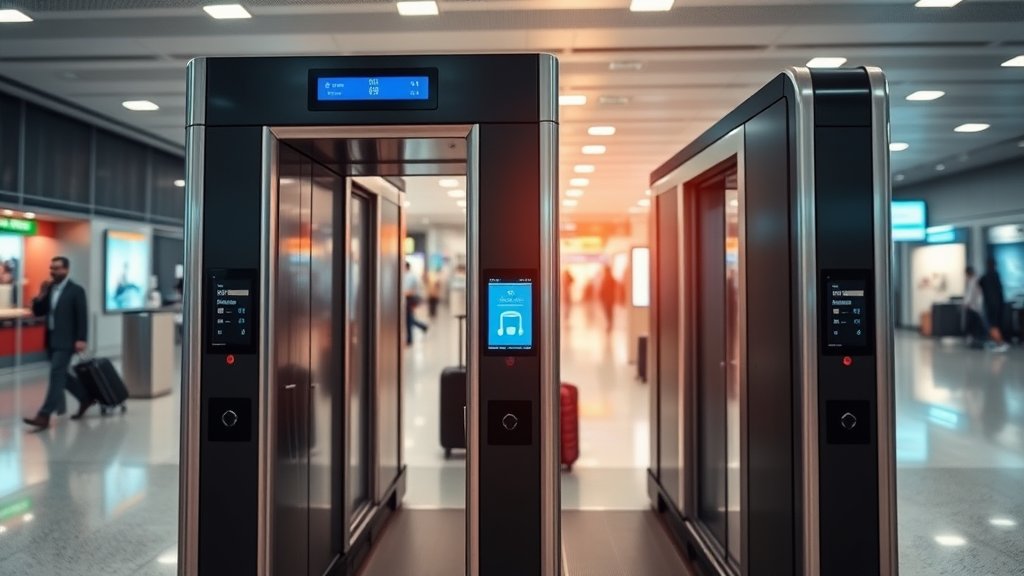
Air travel has always been about getting from point A to B quickly and safely. But over the years, safety has taken on a new meaning. Enter the era of full body scanners. These devices have become staples in airport security, promising to keep the skies safer by detecting hidden threats that might slip past traditional metal detectors. For example, the NUCTECH™ FS6000(BX) is an innovative system designed to rapidly scan cargo and vehicles, enhancing overall security measures.
What exactly are these full body scanners, and why have they become so crucial? Well, they’ve evolved from simple metal detectors to sophisticated machines that can see through clothing and identify concealed items. This tech isn’t just about finding weapons; it’s also about spotting things like explosives and narcotics. So, whether you’re a frequent flyer or someone who dreads the whole airport ordeal, understanding these scanners is key to grasping modern air travel.
How the technology behind these scanners has evolved
The technology behind body scanners has come a long way. Initially, airports relied on metal detectors that could only identify metallic objects. But as threats evolved, so did the technology. The first major leap was the introduction of X-ray body scanners. These devices use low-dose X-rays to create detailed images of a person’s body, highlighting anything that might be hidden under their clothes.
But X-rays were just the beginning. Next came millimeter wave scanners. These use radio waves to create a three-dimensional image of the body. Unlike X-rays, they don’t involve ionizing radiation, making them a bit more palatable for public use. They’re fast too – a scan takes just a couple of seconds, and there’s no need for awkward poses or movements.
Then there are terahertz imaging scanners. These are the new kids on the block, using terahertz signals naturally emitted by the human body to detect concealed items. They offer high-resolution imaging and can even differentiate between materials. So, if you’re hiding something you shouldn’t be, these scanners will find it.
Privacy concerns and public perception
Now, let’s talk about privacy. Body scanners, despite their benefits, have not been without controversy. When they were first introduced, there was a lot of public outcry about privacy invasion. After all, having your body scanned and displayed on a screen felt more than a little intrusive.
To address these concerns, manufacturers have made significant improvements. Modern scanners now use software that generates generic outlines rather than detailed images of the human body. This helps to alleviate some of the privacy issues while still ensuring security.
Still, the debate rages on. Some people feel more secure knowing that advanced technology is being used to protect them. Others worry about potential abuses and the erosion of personal privacy. It’s a delicate balance between safety and personal freedom, and opinions vary widely.
Impact on airport efficiency and travel experience
So how do these scanners affect your actual travel experience? For one thing, they’ve sped up the security process – kind of ironic given how tedious airport security can feel. With traditional methods, passengers often had to undergo pat-downs if something suspicious was detected by metal detectors. Full-body scanners reduce the need for these time-consuming secondary screenings.
Moreover, these scanners can handle high throughput – some models can scan up to 200 units per hour! That means shorter lines and faster processing times for travelers. No one likes standing in line at security checkpoints for ages, so anything that speeds up this process is generally welcomed by passengers.
But it’s not all sunshine and rainbows. Some travelers still find the experience uncomfortable or invasive despite improved privacy measures. And then there’s the question of effectiveness – while these scanners are good at detecting threats, they’re not infallible. False positives can occur, leading to unnecessary delays and frustrations.
In conclusion, full body scanners represent a significant advancement in airport security technology. They’ve evolved to become faster and more efficient while addressing some privacy concerns along the way. However, like any technology, they come with their own set of challenges and controversies. As we move forward, finding that sweet spot between security and convenience will be key to improving the overall travel experience.